Cybersecurity Services for UK Businesses: 78% Plan Growth
For years, IT support has followed a fairly simple routine. Something breaks, you call your provider, they fix it, and everyone gets back to work.
But what happens when the problem isn’t a broken computer? What if an employee accidentally shares confidential information with an AI tool, or someone gains access to your company’s Microsoft 365 account without anyone noticing?
These aren’t problems you can necessarily fix by switching something off and back on again.
As cyber threats become more sophisticated, the demand for cybersecurity services for UK businesses is growing. Companies increasingly need IT support that can identify risks, protect sensitive information and prevent security incidents before they disrupt operations.
And according to new research, IT providers are beginning to recognise that.
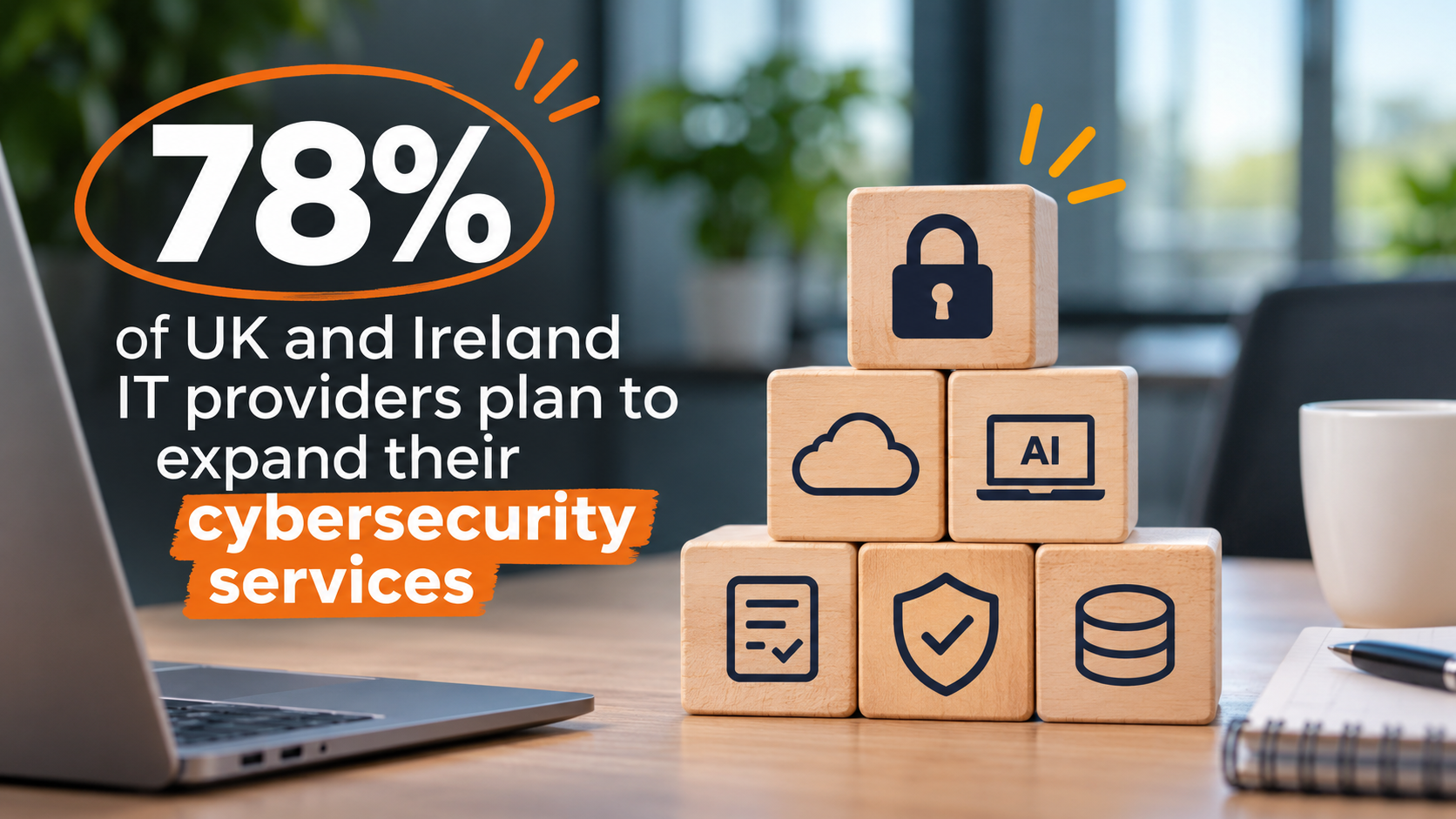
The Global Technology Industry Association (GTIA) has revealed that 78% of IT service providers across the UK and Ireland plan to expand their cybersecurity services over the next 12 months.
The research points to a significant change in the industry. More providers are moving beyond traditional IT support to offer advice on cybersecurity, data protection, compliance and artificial intelligence.
For businesses, this raises an important question: is your current IT provider keeping up?
What Does the Research Actually Tell Us?
GTIA’s latest Channel Trends in Cybersecurity research highlights where IT service providers see the greatest opportunities for growth.
Of the UK and Ireland providers surveyed, 46% expect data privacy and compliance to generate the most revenue growth. Another 43% see opportunities in cybersecurity consulting and risk assessments, while 42% expect growth from AI-related security services.
Cloud security is attracting more attention, too. The proportion of providers planning to introduce cloud security services has risen from 33% in 2025 to 47% this year.
Perhaps the most interesting finding concerns AI.
Nearly half of providers (47%) now identify cybercriminals’ use of generative AI as their biggest cybersecurity concern, up from 37% last year.
It’s worth remembering that these figures describe what IT providers plan to offer, rather than how well they’re currently protecting their customers.
Nevertheless, they tell us something important about the direction of the industry. Cybersecurity is becoming a much bigger part of what businesses expect from their IT support.
AI Is Changing What Businesses Need From IT Support
It’s difficult to avoid AI these days.
Employees use ChatGPT to draft emails, Microsoft Copilot to summarise meetings and countless other tools to make everyday tasks easier.
Most businesses are understandably interested in the productivity benefits. But there’s another side to that conversation.
Imagine an employee uploading a spreadsheet containing customer information into an AI tool without checking how that information will be handled.
They might think they’re saving themselves an hour of work. What they might not realise is that they’ve just shared sensitive business information with an external service.
Now imagine that your company has no policy explaining which AI tools employees can use or what information they’re allowed to share.
Who is responsible for addressing that risk?
This is precisely the sort of issue IT providers are increasingly being asked to help with.
Speaking to ChannelPro, Carolyn April, GTIA’s Vice President of Research and Market Intelligence, explained that customers increasingly want advice on how to approach AI within their businesses.
But AI isn’t only creating concerns about how employees handle data.
It’s also giving cybercriminals new tools. Generative AI can help attackers produce more convincing phishing emails, impersonate legitimate communications and automate parts of their operations.
Businesses therefore need to think about AI from two directions: how their employees use it and how criminals might use it against them.
A good managed IT provider should be able to discuss both.
Your Data Is in the Cloud. But Who Is Protecting It?
Think about how much of your business now operates online.
Emails, financial records, customer information, shared documents and internal communications are often stored across several cloud platforms.
For many businesses, Microsoft 365 has become an essential part of everyday operations.
And while established cloud providers invest heavily in security, that doesn’t mean every account or file is automatically protected against every threat.
Someone still needs to manage permissions, configure multifactor authentication, monitor suspicious activity and make sure former employees no longer have access to company information.
Consider what could happen if an employee left your business six months ago but still had access to a shared folder containing confidential documents.
Would anyone know?
Or what if an attacker managed to compromise an employee’s account? Would your IT provider notice unusual activity, or would you only find out when something went wrong?
These are the types of questions that make cloud security so important.
And with 47% of providers planning to expand into this area, it’s clear that more IT companies see an opportunity to help businesses manage these risks.
Data Protection Is Becoming Part of the IT Conversation
Cybersecurity isn’t just about stopping criminals.
Businesses also have responsibilities around the information they collect, store and process.
In the UK, that includes obligations under UK GDPR and the Data Protection Act 2018.
But compliance isn’t simply a matter of installing antivirus software or choosing a well-known cloud platform.
A business needs to know what personal information it holds, why it’s being collected, who can access it and whether appropriate safeguards are in place.
Different industries also have different requirements.
A law firm handling confidential client documents may face very different risks from a manufacturing company relying on connected equipment and production systems.
This is one reason GTIA’s research places so much emphasis on industry knowledge.
IT providers need to understand the businesses they’re supporting, rather than recommending exactly the same security setup to every customer.
They also need to recognise where technical IT advice ends and specialist compliance or legal advice begins.
What Should Cybersecurity Services for UK Businesses Include?
With so many providers planning to introduce new cybersecurity services, it’s easy to assume that businesses will automatically become better protected.
Unfortunately, it isn’t quite that simple.
A provider can offer an impressive collection of security tools, but those tools are only useful when they’re configured correctly, maintained and supported by people who understand what they’re doing.
What matters is the protection your business actually receives.
If you’re unsure whether your current IT provider is doing enough, there are a few questions worth asking.
- When was our last cybersecurity risk assessment? Your provider should know where your biggest vulnerabilities are and what needs to be done about them.
- How would you know if someone was trying to access our systems? Ask how suspicious activity is detected, investigated and reported.
- How are our Microsoft 365 accounts and cloud services secured? Find out whether access permissions, MFA and security settings are regularly reviewed.
- Do we have a policy for using AI tools at work? Your provider should be able to help you understand the risks and identify appropriate safeguards.
- What happens if we suffer a cyberattack? Who responds, what happens first, and how would you recover your systems and data?
- Are there any security services you don’t provide? A reliable provider should be upfront about its expertise and explain when specialist support is needed.
You don’t need complicated technical explanations. You need clear answers that tell you what is being done to protect your business.
And if your provider can’t explain what security measures are in place, that’s worth investigating.
Is It Time to Rethink Your IT Support?
The fact that 78% of UK and Ireland IT providers plan to expand their cybersecurity services tells us where the industry is heading.
But businesses shouldn’t have to wait for their providers to catch up.
Cybersecurity risks already exist, whether that’s an employee falling for a phishing email, poor account security or sensitive information being shared with the wrong people.
The right cybersecurity services for UK businesses should address these risks before they turn into expensive disruptions.
After all, there’s not much point having someone who can fix your computer in ten minutes if nobody noticed that your business accounts were compromised in the first place.
At Support Stack, we believe IT support should be about more than resolving problems when they appear.
If you’re unsure whether your current setup provides the protection your business needs, we’re happy to have a conversation about it.
